
Parasite Prevention for Pets: Summer Checklist
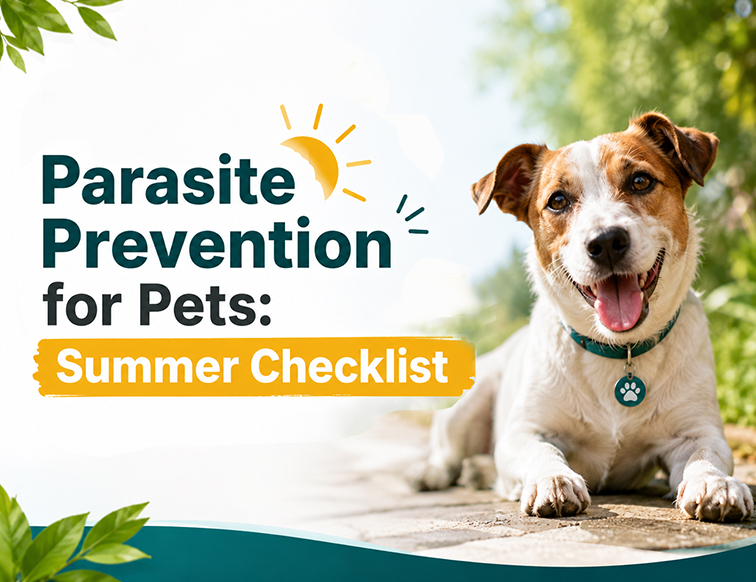
The hot and humid weather of summer results in an increase in various pests and parasites. Parasites thrive in summer due to warm, humid conditions that support faster breeding and infestation. Besides causing immense discomfort, the blood-sucking organisms are also vectors for serious diseases like Rocky Mountain spotted fever and Lyme disease and tapeworms. Therefore, as pet parents, it is important to prevent these parasites from infesting your pals to ensure their comfort and safety. In this blog, we’re happy to present to you a summer pet care checklist for parasite prevention.
Read on to find out more!
Importance of Parasite Prevention for Pets in Summer
Let’s discuss why parasite prevention for pets is crucial in summer.
- Favorable Breeding Conditions
The warm and humid environment of summer offers ideal conditions for parasites like fleas to thrive. Parasites like ticks, on the other hand, hide inside tall grasses and shrubs in summer and latch on to an animal at the first opportunity. Once attached, they can remain on pets for days, sucking blood and transmitting several vector-borne diseases. This makes flea and tick prevention highly important in summer.
- A Faster Life Cycle
External parasites like fleas can complete their life cycle in just 2 to 3 weeks in summer, which is way faster than in winter. Also, the rapid development during summer can turn an infestation into a full-blown one very quickly.
- Increased Outdoor Activity
Owing to a favorable climate, summer calls for increased outdoor activity for both you and your pet. Outdoor trips involving activities like walks, hiking, barbecues and other adventures can expose your pet to parasites that remain concealed in the tall grasses, shrubs, and wooded areas.
Summer Parasite Prevention for Pets: Summer Checklist
Here is a complete summer parasite checklist for pets.
- Start Monthly Preventive Treatment
One of the most effective ways to prevent parasite infestations in pets is by using parasite preventives. There is a plethora of formulas available on the market designed to treat and prevent parasitic infestations in pets of different species. The products are available as both oral and topical formulas and suit pets with different lifestyles and needs.
- Check Your Pet After Outdoor Activities
It is important to physically check your pet after its outdoor activities for parasites. You should carefully check its body, specifically its paws, ears, belly and under its collar for any pest that might have latched onto its body. If you happen to find any, you should remove them promptly.
- Keep Your Yard & Outdoor Areas Clean
Your yard and outdoor areas can be a safe haven for parasites. Therefore, you should trim the grass and remove any leaves or debris that can be breeding grounds for parasites. This will help you keep your pet protected to a great extent.
- Keep Your Home Clean
As parasites can survive in household environments, it is important to keep your home clean to prevent potential infestations. Therefore, you must make sure to declutter your home and vacuum your furniture regularly. It is also crucial to wash your pet’s bedding with a pet-friendly cleaner to remove any parasites or larvae attached to it.
- Groom Your Pet Regularly
Grooming your pet regularly can help you identify infestations before they get severe. You can bathe your pet with a pet-specific shampoo to eliminate parasites and their larvae hidden in the coat. Also, a flea comb can be useful to eliminate any larvae from behind your pet’s ears, on the neck, and between the toes.
What are Some of the Most Effective Parasite Preventives for Dogs and Cats?
Some of the most effective parasite preventives for dogs and cats include:
Dogs
- Oral Treatments: Bravecto for Dogs, NexGard Spectra for Dogs, Simparica Chewables, and Credelio
- Topical Formulas: Bravecto Topical, Frontline Plus for Dogs, and Selehold
- Flea & Tick Collars: Seresto Dog Collar and Scalibor Tick Collars

Cats
- Oral Treatments: Capstar
- Topical Formulas: Bravecto Plus, Frontline Plus for Cats, and NexGard Combo
- Flea & Tick Collars: Seresto Cat Collar and Bob Martin Clear Tick & Flea Collar for Cats

Frequently Asked Questions
- Can I use dog-specific parasite preventives on my cat?
A dog-specific parasite preventive should never be used on cats, as its ingredients can be harmful to cats. Only cat-specific parasitic formulas should be used to treat cats.
- How often should I use parasite preventives in summer?
Most oral and spot-on parasite preventives require monthly administration. However, it is advised to go through the product label carefully to determine the appropriate treatment schedule.
- Can I bathe my pet after applying a topical parasite preventive?
It is advised to wait for at least 48 hours before bathing your dog after applying a topical parasite preventive. However, you can read the product label to get accurate information about the product you’re using.
- Do indoor pets need parasite prevention?
Indoor pets need parasite prevention as much as outdoor pets. This is because pests like fleas and mosquitoes can easily make their way into your home through open doors and windows. Parasites like ticks can hitchhike into your home by attaching to your clothes or shoes.
Concluding Note
With increased parasite activity, summer calls for meticulous parasite prevention for pets to keep them comfortable and protected from vector-borne diseases. By implementing an effective preventive routine, you can help your pet enjoy a healthy and comfortable summer.
At PetCareSupplies, we carry a plethora of parasite preventives for pets at discounted prices. Visit our online store to buy your favorite products from the comfort of your home.